
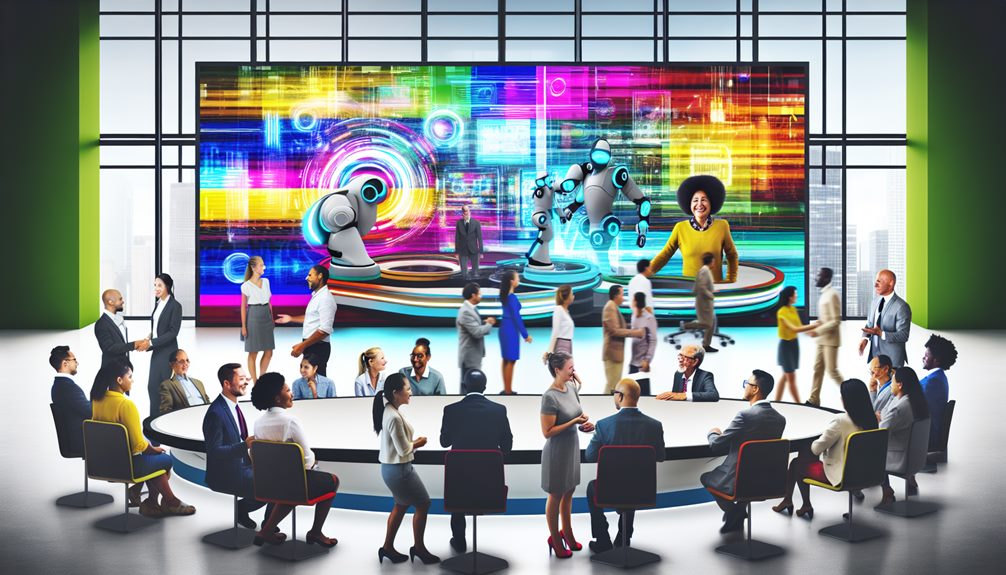
The future of work is characterized by the dynamic collaboration between humans and bots, reshaping industries and enhancing productivity. This synergy allows automation to handle routine tasks, enabling human workers to focus on strategic, creative endeavors. Key sectors, such as healthcare and finance, are already embracing this technology to improve decision-making and efficiency. However, challenges like communication barriers and trust issues remain. As we move forward, new job roles emphasizing both technical skills and emotional intelligence will emerge. Understanding these evolving dynamics is essential for organizations to thrive in this collaborative ecosystem of the future.
Key Takeaways
- Automation is reshaping job roles, necessitating continuous learning and reskilling to adapt to new technologies.
- Human-bot collaboration enhances productivity by allowing humans to focus on strategic decision-making while bots handle routine tasks.
- Trust and communication are vital for effective human-bot interactions; transparency in bot operations builds confidence among users.
- New job roles will emerge that blend creativity and technical skills, requiring adaptability and digital literacy for success in the evolving landscape.
- Ethical considerations, such as data privacy and bias mitigation, are crucial for fostering a collaborative environment between humans and bots.
The Rise of Automation
Automation is reshaping the landscape of work, driving efficiency and transforming traditional roles across industries. As we witness a surge in automation trends, organizations are compelled to adapt their workforce to harness the potential of technological advancements. This evolution is not merely a change in tools; it signifies a fundamental shift in how we conceive labor, productivity, and operational efficiency.
The integration of artificial intelligence (AI) and advanced productivity tools is redefining tasks, leading to significant job displacement in certain sectors. While this may evoke concerns regarding unemployment, it simultaneously offers a unique opportunity for individuals to reevaluate their skills. As skill gaps emerge, the labor market must pivot to emphasize continuous learning and adaptive strategies. Workers who embrace this alteration can position themselves at the forefront of digital transformation, thereby enhancing their value in a rapidly evolving economy.
However, the path to successful workforce adaptation is fraught with challenges. Organizations must prioritize reskilling and upskilling initiatives to mitigate the adverse effects of automation on employment. By fostering a culture of innovation and flexibility, businesses can navigate the complexities of this shift while revealing new avenues for growth.
Ultimately, the rise of automation heralds a transformative era, where human potential can be amplified through collaboration with machines. This future requires a proactive approach, encouraging workers to embrace change and seize opportunities that arise in an increasingly automated world. Through strategic adaptation, we can forge a labor market that thrives on innovation, resilience, and freedom.
Benefits of Human-Bot Collaboration
The collaboration between humans and bots is poised to revolutionize the workplace by greatly enhancing efficiency and productivity. By automating routine tasks, bots free human workers to focus on strategic decision-making, ultimately leading to improved outcomes. This synergy not only streamlines operations but also fosters a more innovative and responsive organizational culture.
Enhanced Efficiency and Productivity
In today's rapidly evolving workplace, organizations increasingly recognize that harnessing the capabilities of both humans and bots can lead to remarkable enhancements in efficiency and productivity. The collaboration between human ingenuity and robotic precision paves the way for innovative task optimization, allowing teams to focus on higher-level strategic initiatives while bots manage repetitive and time-consuming tasks.
By integrating workflows, organizations can streamline processes that traditionally required extensive human effort. This synergy not only accelerates project timelines but also enhances output quality. For instance, bots can analyze vast datasets in real-time, providing insights that empower employees to make informed decisions swiftly. As humans engage in more creative and complex problem-solving, the potential for innovation expands, fostering an environment where teams can thrive.
Moreover, this collaboration fosters a sense of autonomy, as employees are liberated from mundane tasks, enabling them to pursue meaningful work that aligns with their passions. Ultimately, the dynamic interplay between humans and bots cultivates a future where enhanced efficiency and productivity are not merely aspirational but achievable, driving organizations toward unprecedented success in an increasingly competitive landscape.
Improved Decision-Making Processes
A transformative shift in decision-making processes emerges as humans and bots collaborate, leveraging their respective strengths to enhance analytical capabilities and operational agility. This collaboration fosters an environment where data-driven insights are paramount, enabling organizations to navigate complexities with unprecedented clarity. The integration of cognitive computing facilitates rapid processing of vast datasets, allowing human decision-makers to focus on strategic thinking and creative problem-solving.
The benefits of this harmonious partnership can be summarized as follows:
- Enhanced Accuracy: Bots analyze data with precision, reducing human error and ensuring decisions are based on reliable information.
- Accelerated Insights: By processing information at remarkable speeds, bots provide actionable insights that allow organizations to respond to market changes swiftly.
- Empowered Creativity: Freed from mundane tasks, human contributors can engage in higher-level thinking, fostering innovation and strategic initiatives.
As we embrace this new era, the confluence of human intuition and machine learning not only transforms decision-making but cultivates a workspace that values freedom, creativity, and informed choices. Together, humans and bots are poised to redefine the future of work.
Key Industries Embracing Bots
As industries evolve in response to advancing technology, various sectors are increasingly integrating bots into their operations to enhance efficiency and productivity. In healthcare integration, bots streamline patient management, assisting in diagnostics and treatment plans, thereby allowing medical professionals to focus on patient care. Retail automation has transformed inventory management and customer interactions, ensuring a seamless shopping experience while maximizing operational efficiencies.
Manufacturing robotics have redefined production lines, enabling precision and speed that human labor alone cannot achieve. This shift not only optimizes output but also fosters a safer working environment. In the domain of customer service, intelligent bots handle inquiries and complaints, providing 24/7 support and freeing human agents to tackle more complex issues, thereby enhancing overall satisfaction.
The finance sector is experiencing a revolution with advanced finance algorithms that analyze market trends in real time, allowing for more informed decision-making and risk management. Transportation logistics also benefit from bots, which optimize route planning and delivery schedules, ultimately reducing operational costs.
Moreover, education technology is utilizing bots to personalize learning experiences, aiding educators in identifying students' needs. Agriculture drones are transforming farming by monitoring crops, optimizing resources, and increasing yield. Cybersecurity measures are fortified by algorithms that detect anomalies and threats proactively, safeguarding sensitive data.
Challenges in Human-Bot Interaction
Steering through the complexities of human-bot interaction presents considerable challenges that require careful consideration and innovative solutions. As we embrace the potential of collaborative technologies, we must address several critical obstacles to guarantee seamless integration into our work environments.
- Communication Barriers: Effective interaction hinges on clear dialogue. Bots often struggle with nuanced language and context, leading to misunderstandings that can hinder productivity.
- Trust Issues: Establishing trust in human-bot relationships is paramount. Users must feel confident in a bot's capabilities, which requires transparency in its operations and decision-making processes.
- User Experience: A well-designed interface can markedly enhance user experience. However, adaptability challenges arise when bots do not evolve with user needs, resulting in cognitive overload and frustration.
To navigate these challenges, organizations must invest in robust training requirements to empower users and bots alike. This includes developing feedback mechanisms that allow for continuous learning and improvement. Additionally, incorporating elements of emotional intelligence into bot design can foster a more intuitive interaction, bridging the gap between human sensitivity and machine efficiency.
Ultimately, addressing these issues is not merely about enhancing productivity but also about preserving the human element in our workplaces. As we tread this path, it is essential to remain vigilant against potential job displacement, guaranteeing that technology serves as an ally rather than a replacement. Only through thoughtful collaboration can we harness the full potential of human-bot interaction in the future of work.
Future Job Roles and Skills
As automation and artificial intelligence reshape industries, new job roles will emerge that require a blend of human creativity and technical acumen. The demand for essential skills such as data literacy, emotional intelligence, and adaptability will become paramount, enabling workers to thrive in collaboration with advanced technologies. Embracing these shifts will not only redefine career paths but also cultivate a workforce that is agile and prepared for the complexities of the future.
Emerging Job Opportunities
The future landscape of work is poised to reveal a myriad of emerging job opportunities that will redefine traditional roles and necessitate new skill sets. As remote work continues to gain traction, the demand for roles that facilitate job transformation will surge, emphasizing workforce adaptability and tech integration.
Key opportunities on the horizon include:
- AI Training Specialists: Professionals focused on training AI systems will be critical as organizations increasingly rely on intelligent automation.
- Digital Literacy Coaches: With the evolution of the employment landscape, experts who can enhance digital literacy will be essential in guiding individuals through the complexities of new technologies.
- Collaborative Tool Innovators: As sector evolution accelerates, individuals who can develop and refine collaborative tools will play a pivotal role in enhancing team dynamics and productivity.
These roles will not only reflect the innovation strategies necessary for maneuvering a rapidly changing work environment but also highlight the importance of adapting to new realities. As we embrace this shift, fostering a culture of continuous learning will empower the workforce to thrive within the interconnected ecosystem of humans and bots.
Essential Skills Development
Maneuvering the rapidly evolving job landscape will require a robust focus on skills development that aligns with emerging roles. As we progress into an era where humans and bots collaborate seamlessly, critical thinking emerges as a cornerstone skill, enabling individuals to navigate complex challenges effectively. Emotional intelligence will also become crucial, fostering meaningful interactions in diverse teams.
Adaptability training will empower workers to thrive amidst constant change, while digital literacy will serve as the foundation for engaging with advanced technologies. Creative problem-solving abilities will be essential, allowing teams to innovate and devise solutions that transcend traditional paradigms.
Collaboration skills will facilitate productive partnerships, blending human insight with machine efficiency. In addition, technical proficiency will be fundamental for leveraging data analysis, transforming raw information into actionable insights. Effective communication strategies will underpin successful teamwork, ensuring clarity and alignment across various stakeholders.
Ultimately, a commitment to lifelong learning will be paramount, as individuals must continuously evolve to meet the demands of future job roles. Embracing these essential skills will not only enhance individual capabilities but also empower organizations to harness the full potential of their human and robotic workforce.
Ethical Considerations in Automation
How can we navigate the complex ethical landscape of automation in the workplace? As automation becomes increasingly prevalent, organizations must confront the ethical implications that accompany this transformation. It is essential to establish clear transparency standards and accountability frameworks to guarantee that automation serves as a tool for enhancing workforce equity and not as a vehicle for exacerbating existing disparities.
To foster a responsible approach to automation, consider the following key elements:
- Data Privacy: Safeguarding employee data is paramount. Organizations must implement robust data privacy measures, making certain that personal information is handled with the utmost care and respect.
- Bias Mitigation: Automation systems can inadvertently perpetuate biases present in their training data. Proactive strategies for bias mitigation must be developed to guarantee that algorithms promote fairness and equality among all workers.
- Trust Building: Establishing trust between humans and bots is crucial for successful collaboration. Companies should prioritize transparency in how automated systems operate and the moral responsibilities they uphold, thereby fostering an environment of trust and openness.
Ultimately, organizations must acknowledge their social impact and uphold regulatory compliance as they integrate automation into their operations. By doing so, they can champion ethical practices that not only enhance productivity but also promote a future where both humans and machines coexist harmoniously, with a shared commitment to equity and respect.
Preparing for a Collaborative Future
Increasingly, organizations are recognizing the necessity of preparing for a collaborative future where humans and bots work side by side. To thrive in this evolving landscape, businesses must develop robust collaboration strategies that prioritize workforce adaptability and seamless technology integration. The successful merger of human and artificial intelligence hinges on effective communication frameworks that foster transparency and openness.
Essential to this transformative journey are thorough training programs designed to equip employees with the skills needed to navigate this new paradigm. These initiatives should not only focus on technical competencies but also cultivate critical interpersonal skills, facilitating a culture of trust building and mutual respect. As roles evolve, leaders must embrace new responsibilities, championing cultural shifts that encourage experimentation and resilience in the face of change.
Employee engagement will be pivotal in this collaborative future. Organizations must actively involve their workforce in the change management process, soliciting input and feedback to guarantee that human perspectives remain at the forefront of technological advancements. By fostering an environment where employees feel valued and heard, organizations can nurture a sense of ownership and commitment to collective goals.
In this visionary landscape, effective leadership will guide organizations through the complexities of integration, ensuring that both human creativity and robotic efficiency are harnessed synergistically. As we commence on this journey, businesses that prioritize collaboration will not only enhance productivity but also create a vibrant ecosystem where innovation can flourish, ultimately paving the way for a more liberated and dynamic workforce.
Frequently Asked Questions
How Will Collaboration Between Humans and Bots Impact Workplace Culture?
Collaboration between humans and bots will reshape workplace culture by redefining trust dynamics and necessitating innovative communication strategies. This evolution fosters a more adaptive environment, enhancing creativity and allowing individuals greater freedom in their professional interactions.
What Training Is Necessary for Effective Human-Bot Collaboration?
Effective human-bot collaboration necessitates a dual approach: enhancing skill development alongside innovative communication strategies. By fostering adaptability and embracing technology, organizations can empower employees, ensuring they thrive in a landscape defined by dynamic human-machine interactions.
Can Bots Adapt to Different Working Styles of Humans?
Bots can indeed adapt to varying human working styles through adaptive algorithms, leveraging behavioral analysis and emotional intelligence. This capability enhances user experience by facilitating personalized interactions, task optimization, and continuous improvement via collaborative learning and feedback mechanisms.
How Do Humans Maintain Job Relevance in a Bot-Driven Workplace?
In a bot-driven workplace, humans can maintain job relevance through skill evolution and adaptability strategies, prioritizing job security and employee engagement while steering automation ethics to achieve a productivity balance that fosters innovation and freedom.
What Tools Are Available for Enhancing Human-Bot Collaboration?
To enhance human-bot collaboration, organizations can leverage collaboration tools and productivity automation platforms. These innovative solutions empower teams, streamline workflows, and foster a dynamic ecosystem where human creativity and technological efficiency coexist harmoniously, driving unprecedented outcomes.