
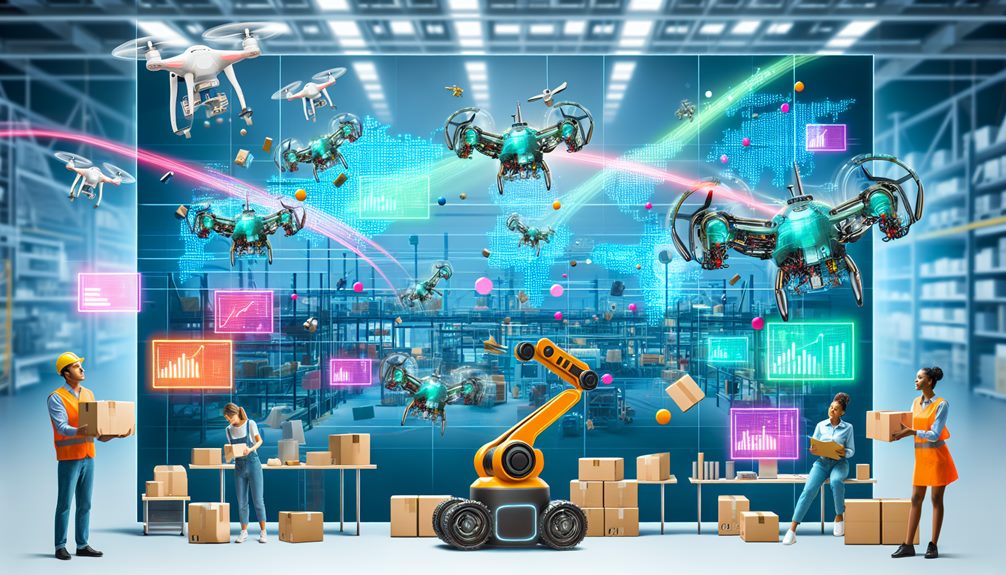
Automation is reshaping industries by driving innovation through efficiency and enhanced decision-making. In manufacturing, smart factories integrate IoT technology, enhancing productivity and reducing errors. Healthcare sees advancements such as robotic surgery and telehealth platforms that improve patient care. Retail benefits from personalized shopping experiences using automated data analytics, while financial services streamline transactions and enhance compliance. Agriculture utilizes precision farming and drone technology to optimize resources. Overall, automation is not merely improving processes; it heralds a new era of adaptability and innovation across sectors, paving the way for deeper insights into future developments.
Key Takeaways
- Automation enhances efficiency in manufacturing through smart factories, predictive maintenance, and automated quality control, driving product innovation.
- In healthcare, automation improves access and patient care with telehealth platforms, robotic surgery, and data management.
- Retail experiences are transformed by personalized shopping, streamlined inventory management, and dynamic recommendations powered by automation.
- Financial services benefit from streamlined transactions, advanced risk management, and automated invoicing, reducing costs and enhancing security.
- Agriculture leverages automation through precision farming, drone technology, and farm robotics, leading to increased productivity and sustainability.
Transformation in Manufacturing
The transformation in manufacturing, driven by automation, has become a pivotal force reshaping the industry landscape. At the forefront of this revolution are smart factories, where the integration of Internet of Things (IoT) technologies facilitates real-time data exchange among machines, enhancing operational efficiency. This interconnectedness supports predictive maintenance, allowing manufacturers to foresee equipment failures before they occur, thereby minimizing downtime and associated costs.
Furthermore, automated quality control systems leverage advanced robotics integration to guarantee consistent product standards, considerably reducing error margins. The implementation of digital twins—virtual representations of physical assets—enables manufacturers to simulate processes and optimize performance in a risk-free environment. This leads to improved process optimization, where workflows are continually refined to maximize productivity.
Energy efficiency has also emerged as a critical focus, with automation enabling more sustainable practices by reducing waste and optimizing resource use. Supply chain automation further streamlines logistics, enhancing responsiveness and agility in meeting market demands. However, this rapid advancement necessitates workforce adaptation; upskilling and reskilling initiatives are essential to equip employees with the necessary competencies to thrive in this new landscape.
As the manufacturing sector embraces these technological advancements, it not only drives innovation but also fosters a culture of continuous improvement. The confluence of smart technologies and human ingenuity ultimately creates a more resilient and adaptable manufacturing ecosystem, empowering organizations to navigate the complexities of an ever-evolving marketplace.
Revolutionizing Healthcare Delivery
How can automation transform the landscape of healthcare delivery? The integration of innovative technologies is revolutionizing patient care, enhancing efficiency, and expanding access. Automation is ushering in a new era where healthcare professionals can focus more on patient interaction rather than administrative tasks, ultimately improving the quality of care.
Key advancements in automation within the healthcare sector include:
- Telehealth Advancements: The rise of telehealth platforms has allowed patients to access medical professionals from the comfort of their homes. Automated scheduling, virtual consultations, and remote monitoring systems provide a seamless experience that empowers patients and expands healthcare access, particularly in rural areas.
- Robotic Surgery: Automation in surgical procedures through robotic systems enhances precision and reduces recovery times. These technologies allow surgeons to perform complex operations with minimal invasiveness, leading to less trauma for patients and shorter hospital stays.
- Data Management and Analytics: Automation facilitates the efficient management of patient data, enabling healthcare providers to analyze trends, personalize treatment plans, and improve operational efficiency. By leveraging artificial intelligence, healthcare organizations can predict patient needs and allocate resources more effectively.
As automation continues to evolve, it is clear that its capabilities will greatly enhance healthcare delivery. By embracing these innovations, the industry can guarantee that patients receive timely, personalized, and efficient care, ultimately fostering a system that champions individual freedom and well-being.
Enhancing Retail Experiences
The integration of automation in retail is transforming the way consumers interact with brands, paving the way for personalized shopping experiences that cater to individual preferences and behaviors. Additionally, streamlined inventory management systems enhance operational efficiency, ensuring that products are readily available to meet customer demand. Together, these advancements not only improve customer satisfaction but also drive competitive advantage in an ever-evolving marketplace.
Personalized Shopping Experiences
Frequently, retailers are turning to automation to create personalized shopping experiences that cater to individual consumer preferences and behaviors. This shift not only enhances customer engagement but also fosters loyalty, as consumers increasingly seek brands that understand their unique needs.
Automation enables retailers to implement dynamic recommendations, which analyze past purchases and browsing habits to suggest products tailored to each shopper. This personalized approach not only improves sales but also markedly enhances the shopping experience. Key benefits of automated personalized shopping experiences include:
- Increased Relevance: Consumers receive suggestions that align closely with their preferences, making shopping more efficient.
- Enhanced Customer Engagement: Brands can interact with shoppers in real-time, offering tailored discounts or promotions based on their behavior.
- Data-Driven Insights: Retailers can analyze consumer data to continuously refine their offerings, ensuring that the shopping experience evolves alongside changing preferences.
Incorporating these elements allows retailers to build deeper connections with customers, ultimately driving innovation within the retail sector. By embracing automation, businesses can not only meet but exceed consumer expectations, creating a more liberated and satisfying shopping journey.
Streamlined Inventory Management
As retailers enhance personalized shopping experiences through automation, the need for efficient inventory management becomes increasingly apparent. Streamlined inventory management not only improves customer satisfaction but also maximizes overall operational efficiency. Automated forecasting techniques enable retailers to anticipate demand more accurately, facilitating effective demand planning and inventory enhancement.
By leveraging data analytics, businesses can gain insights into consumer behavior, enhancing supply chain visibility and ensuring timely stock replenishment. Real-time tracking technology further enhances inventory accuracy, allowing retailers to monitor stock levels and reduce discrepancies. The integration of warehouse robotics automates repetitive tasks, leading to faster processing times and minimized human error.
Moreover, process automation in inventory management supports businesses in maintaining ideal stock levels, consequently reducing costs associated with overstocking or stockouts. This holistic approach to inventory management fosters a more agile retail environment, empowering retailers to respond swiftly to changing market demands. Ultimately, embracing these automated solutions paves the way for an innovative retail landscape where efficiency and personalized experiences coexist harmoniously, granting retailers the freedom to focus on strategic growth initiatives.
Automating Financial Services
The automation of financial services is revolutionizing the industry by streamlining transaction processes, thereby enhancing efficiency and reducing operational costs. Additionally, advanced algorithms are improving risk management practices, allowing institutions to identify and mitigate potential threats more effectively. Moreover, automation facilitates improved regulatory compliance, enabling firms to adapt swiftly to changing regulations while minimizing the risk of non-compliance.
Streamlining Transaction Processes
In the rapidly evolving landscape of financial services, streamlining transaction processes through automation has emerged as an essential innovation. The increasing demand for transaction efficiency necessitates robust systems that enhance operational workflows. By integrating automation, organizations can notably reduce manual tasks, thereby improving accuracy and speed.
Key benefits of automating transaction processes include:
- Automated Invoicing: This reduces the time spent on generating and sending invoices, ensuring timely payments and minimizing errors.
- Digital Payment Solutions: These enhance customer onboarding experiences while providing secure, seamless transactions that foster trust and reliability.
- Fraud Detection and Payment Reconciliation: Automation facilitates real-time monitoring, ensuring data security and swift identification of discrepancies.
Furthermore, the implementation of electronic signatures simplifies contract management and accelerates transaction finalization. Workflow optimization through integration solutions allows for cohesive operations across various platforms, notably improving the overall customer experience. As financial services embrace automation, they release greater freedom for clients and providers alike, ultimately leading to a more efficient and secure financial ecosystem.
Enhancing Risk Management
Automation has revolutionized risk management in financial services, enabling organizations to identify, assess, and mitigate risks with unprecedented efficiency. By leveraging predictive analytics, financial institutions can analyze vast datasets to forecast potential risks, allowing for proactive measures rather than reactive responses. Automated assessments streamline the evaluation process, ensuring that risks are consistently monitored and addressed in real-time.
Furthermore, automation enhances risk mitigation strategies by integrating robust compliance monitoring systems, ensuring adherence to regulatory frameworks and reducing exposure to legal penalties. In an era where data security is paramount, automated fraud detection mechanisms provide an additional layer of protection, swiftly identifying anomalies that could signify fraudulent activities.
Scenario planning and stress testing, once labor-intensive processes, benefit greatly from automation. These tools allow organizations to simulate various market conditions, enabling them to prepare for potential disruptions. By automating these critical functions, financial services can not only enhance their risk management capabilities but also foster a culture of resilience and agility. Ultimately, the integration of automation empowers organizations to navigate uncertainties with greater confidence, ensuring sustainability and continued growth in an ever-evolving landscape.
Improving Regulatory Compliance
Financial institutions' evolving regulatory landscape necessitates innovative approaches to guarantee compliance, making automation a critical ally in this endeavor. As financial services grapple with increasing complexities in regulations, automation emerges as a solution that streamlines processes and enhances accuracy. By leveraging technology, organizations can implement systems that not only simplify compliance but also promote transparency and accountability.
Key benefits of automation in regulatory compliance include:
- Automated Audits: Automation facilitates the execution of audits with precision, ensuring that all transactions and processes adhere to regulatory standards without the manual overhead.
- Compliance Tracking: Automated compliance tracking systems allow financial institutions to monitor regulatory changes in real-time, ensuring that necessary adjustments are implemented swiftly and efficiently.
- Risk Mitigation: By automating compliance processes, organizations can identify potential compliance risks earlier, reducing the likelihood of penalties and safeguarding their reputations.
Innovations in Agriculture
Amidst the ongoing evolution of agricultural practices, innovations are reshaping how food is produced, managed, and distributed. The agricultural sector is increasingly embracing precision farming, which utilizes advanced technologies to enhance productivity and guarantee sustainability. Central to this transformation is drone technology, which facilitates aerial crop monitoring, providing farmers with real-time insights into plant health and resource needs.
Automated irrigation systems have emerged as a essential innovation, allowing for precise water delivery based on data collected from soil sensors. This not only conserves water but also optimizes crop yield by guaranteeing that plants receive the right amount of moisture at the right time. Data analytics plays a significant role in this ecosystem, enabling farmers to analyze large datasets to make informed decisions regarding pest management and soil health.
Moreover, farm robotics are revolutionizing labor-intensive tasks, from planting to harvesting, thereby increasing efficiency and reducing operational costs. These technologies contribute to yield optimization by minimizing human error and maximizing the effectiveness of inputs.
As these innovations proliferate, they promote sustainable practices that are critical for addressing global food security challenges. By harnessing these advancements, the agricultural industry is not only enhancing productivity but also paving the way for a more resilient and environmentally conscious future. In this era of automation, the potential for innovation in agriculture is boundless, offering an opportunity to redefine how we think about food production and its impact on the planet.
Smart Logistics and Supply Chain
The rapid integration of smart technologies is transforming logistics and supply chain management, enhancing efficiency and responsiveness. As industries endeavor for greater agility, the adoption of automation tools is becoming imperative. Key advancements include:
- Autonomous Vehicles: These vehicles streamline transportation processes, reducing reliance on human drivers and increasing delivery speeds. They are poised to revolutionize last mile delivery, making it faster and more cost-effective.
- IoT Integration and Real-Time Tracking: The Internet of Things (IoT) enables seamless connectivity among devices, providing real-time tracking of goods throughout the supply chain. This transparency enhances visibility and allows for proactive problem-solving, thereby increasing supply chain resilience.
- Predictive Analytics and Demand Forecasting: Leveraging big data, predictive analytics empowers businesses to anticipate market demands accurately. This foresight aids in optimizing inventories and minimizing waste, ensuring that resources align efficiently with consumer needs.
Furthermore, warehouse robotics and digital twins augment operational efficiency by automating repetitive tasks and providing virtual models for scenario analysis. The implementation of smart contracts facilitates secure transactions and reduces administrative overhead, further streamlining operations.
In essence, the integration of these technologies is not merely about automation; it represents a shift towards smarter, more responsive logistics systems. By embracing these innovations, organizations can enhance productivity while ensuring they remain adaptable in an ever-evolving marketplace. The future of logistics is not just automated but intelligently interconnected, paving the way for a more liberated and efficient supply chain landscape.
Future Trends in Automation
How will the evolving landscape of automation reshape industries in the coming years? As we shift into an era marked by rapid digital transformation, the integration of predictive analytics and machine learning will become instrumental in driving workflow optimization. Industries will increasingly rely on data-driven decision making, allowing businesses to anticipate market shifts and respond with agility.
Autonomous systems will redefine operational paradigms, enabling organizations to automate routine tasks through advanced robotic processes. This change will not only enhance efficiency but will also free up human resources for more strategic roles, fostering a new culture of human-machine collaboration. As AI integration becomes more sophisticated, the synergy between humans and machines will empower teams to innovate and adapt swiftly to changing demands.
The rise of process automation will also facilitate scalability, allowing businesses to streamline operations while maintaining quality. Companies that embrace these technologies will likely see significant competitive advantages, as they harness real-time data to inform strategy and execution.
Looking ahead, organizations must be prepared to navigate the complexities of this automation revolution. By embracing a mindset centered on innovation and flexibility, they can leverage the full potential of emerging technologies. As industries evolve, the interplay of automation and human ingenuity will be paramount in shaping a future characterized by unparalleled efficiency and adaptability. The road ahead is not merely about replacing jobs; it's about redefining them in a way that empowers individuals and drives sustained growth.
Frequently Asked Questions
What Are the Potential Job Impacts of Increased Automation?
Increased automation may lead to job displacement, necessitating skill adaptation among workers. This workforce transformation can create new employment opportunities, fostering an environment where individuals can pursue diverse career paths aligned with technological advancements.
How Can Small Businesses Adopt Automation Technology Effectively?
Small businesses can adopt automation technology effectively by identifying cost-effective solutions that enhance efficiency. Implementing streamlined processes not only reduces operational costs but also fosters agility, enabling businesses to respond swiftly to market demands and opportunities.
What Are the Ethical Concerns Associated With Automation?
Ethical concerns associated with automation include data privacy issues, where sensitive information may be mishandled, and algorithm bias, which can perpetuate inequalities. Addressing these concerns is essential for fostering trust and ensuring equitable outcomes in automated systems.
How Does Automation Affect Sustainability and Environmental Impact?
Automation considerably enhances sustainability by improving energy efficiency, enabling waste reduction, and optimizing resource management. By integrating eco-friendly technologies, industries can lower their carbon footprint and promote sustainable practices, ultimately fostering a more environmentally responsible future.
What Skills Will Be Most Valuable in an Automated Workforce?
In an automated workforce, critical thinking, emotional intelligence, and adaptability skills will be paramount. Additionally, technical proficiency, collaboration techniques, problem-solving strategies, creativity enhancement, and data literacy are essential for maneuvering complex, evolving work environments effectively.