
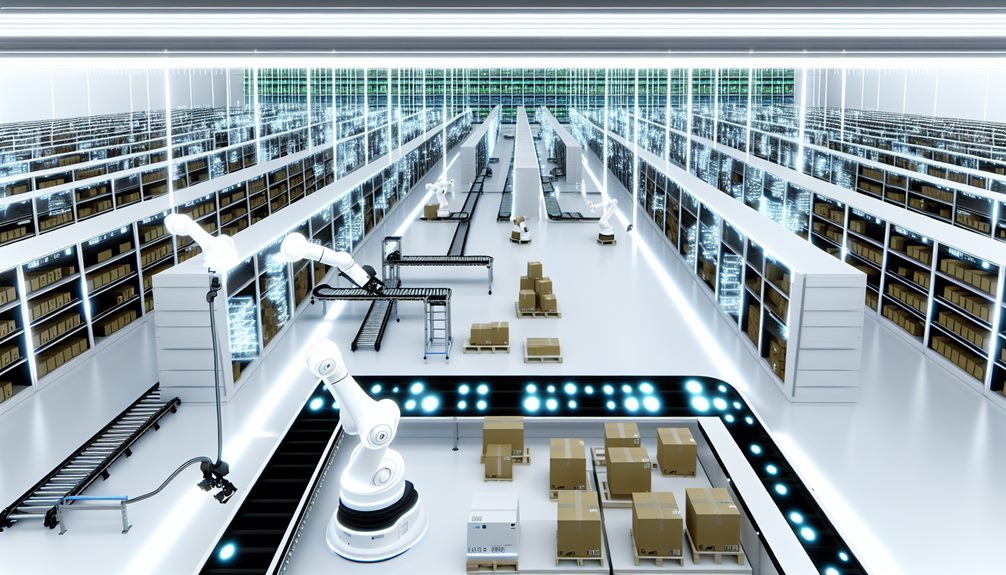
Automating inventory management greatly enhances supply chain performance by streamlining processes and improving accuracy. Key benefits include cost reductions, as labor-intensive tracking is minimized, and error reduction, allowing for more reliable stock levels. Technologies such as AI, IoT, and cloud solutions facilitate real-time data insights and predictive analytics, aiding in proactive management. Effective implementation requires careful process optimization, strategic technology selection, and detailed employee training. While challenges like data accuracy and system integration exist, addressing them paves the way for greater operational efficiency. Insights into the latest trends reveal further opportunities for optimization within this rapidly evolving landscape.
Key Takeaways
- Automation in inventory management leads to significant cost savings by reducing labor and operational expenses through streamlined processes.
- Implementing AI algorithms enhances demand forecasting and optimizes stock levels, minimizing stockouts and overstock situations.
- Real-time tracking using IoT and RFID technology improves inventory visibility and accuracy, enabling proactive management of stock levels.
- Employee training and change management are crucial for smooth transitions to automated systems, fostering a culture that embraces technology.
- Regular monitoring of key performance indicators (KPIs) helps measure the success of automation initiatives and aligns with organizational goals.
Benefits of Automation
Automation in inventory management offers numerous advantages that can greatly enhance operational efficiency. One of the most compelling benefits is cost savings. By automating processes, businesses can considerably reduce labor costs associated with manual inventory tracking and management. This reduction in human intervention not only lowers expenses but also minimizes the risk of errors, leading to improved operational reliability.
Error reduction is critical in inventory management, as inaccuracies can lead to stockouts or overstock situations, both of which can be costly. Automated systems enhance accuracy by employing advanced algorithms and real-time data updates, ensuring that inventory counts are precise and reflective of actual stock levels. This accuracy fosters trust in the data, allowing businesses to make informed decisions based on factual insights.
Time efficiency is another crucial advantage of automation. By streamlining inventory processes, companies can allocate resources more effectively and focus on strategic initiatives rather than mundane tasks. This shift not only boosts productivity but also allows teams to respond faster to market changes and customer demands.
Moreover, automation provides enhanced visibility into inventory levels and movements. Real-time data insights enable businesses to monitor stock performance and trends more effectively, facilitating proactive management strategies. With improved visibility, organizations can optimize their supply chain, ensuring that they meet customer demands while minimizing excess inventory.
Key Technologies for Automation
A variety of key technologies play a pivotal role in transforming inventory management through automation. Central to this transformation are robotic systems that enhance operational efficiency by streamlining the handling and movement of goods. These systems minimize human error and accelerate processing times, thereby enabling businesses to respond swiftly to market demands.
AI algorithms further augment inventory management by providing predictive analytics that optimize stock levels. By leveraging machine learning, organizations can forecast inventory needs based on historical data and market trends, allowing for a more agile supply chain. This strategic foresight is essential in minimizing excess stock and reducing carrying costs.
IoT integration is another critical component, enabling real-time tracking of inventory levels and conditions. Through interconnected devices, businesses gain visibility into their supply chain, facilitating quicker decision-making and enhanced responsiveness. Coupled with RFID technology, which allows for automated data capture, organizations can achieve unprecedented accuracy in inventory tracking.
Data analytics serves as the backbone of these technologies, converting raw data into actionable insights. By analyzing inventory metrics, businesses can identify inefficiencies and optimize their processes accordingly. Additionally, cloud solutions provide a scalable infrastructure that supports these technologies, ensuring accessibility and collaboration across global networks.
Implementation Strategies
Effective implementation strategies are essential for the successful integration of automated inventory management systems within an organization. To achieve ideal outcomes, organizations must prioritize process optimization and seamless data integration. A structured approach begins with a thorough assessment of existing inventory practices, identifying bottlenecks and inefficiencies that can be addressed through automation.
Next, organizations should select the appropriate technology that aligns with their specific operational needs. This involves evaluating software solutions that offer robust capabilities in data integration, ensuring that all relevant systems—such as ERP, procurement, and logistics—can communicate effectively. By creating a unified data ecosystem, businesses can enhance visibility and accuracy across their supply chain.
Training employees is another important aspect of the implementation strategy. Stakeholders must be equipped with the knowledge and tools necessary to navigate the new automated systems confidently. This fosters a culture of adaptability, where team members feel empowered to embrace change and contribute to ongoing process optimization.
Additionally, establishing clear metrics for success is essential. Organizations should define key performance indicators (KPIs) that reflect the desired outcomes of the automation initiative. Regular monitoring and analysis of these metrics will enable timely adjustments, ensuring that the system evolves in line with organizational goals.
Ultimately, a well-executed implementation strategy not only streamlines inventory management but also enhances overall supply chain performance, providing organizations with the freedom to respond agilely to market demands and opportunities.
Challenges and Solutions
Despite the potential benefits of automated inventory management, organizations frequently encounter various challenges during implementation. One significant obstacle is achieving sufficient stock visibility across the supply chain. Without real-time insights into inventory levels, businesses struggle with demand forecasting, leading to overstocking or stockouts. This not only hampers operational efficiency but also impacts customer satisfaction.
Moreover, data accuracy emerges as a vital challenge. Inaccurate data inputs can distort inventory records, resulting in misguided strategic decisions. Organizations must invest in robust data validation processes to guarantee that the information driving their automation systems is both precise and reliable. This step is essential for effective process optimization, as any inaccuracies can propagate through the supply chain, exacerbating inefficiencies.
Another challenge is the integration of automated systems with existing processes and technologies. Organizations must carefully evaluate their current infrastructure to facilitate a seamless shift. A strategic approach that includes thorough training and change management can help mitigate resistance from employees, fostering a culture that embraces technological advancements.
Future Trends in Inventory Management
The evolution of inventory management is poised to be greatly influenced by advancements in technology and data analytics. As businesses endeavor for efficiency and agility, the integration of real-time tracking systems will facilitate enhanced supply chain visibility. This capability allows organizations to monitor inventory levels continuously, thereby reducing the risk of stockouts and overstock situations.
Moving forward, demand forecasting will become increasingly sophisticated through predictive analytics. Companies will leverage historical data and market trends to anticipate customer needs, enabling smart replenishment strategies. This approach minimizes excess inventory while ensuring that stock levels align with actual demand, hence driving inventory optimization.
AI integration will play a pivotal role in automating these processes. Machine learning algorithms will analyze vast amounts of data, generating insights that lead to data-driven decisions. This shift will empower companies to respond dynamically to market fluctuations, enhancing operational resilience.
Moreover, as organizations embrace these technological advancements, the importance of collaboration across the supply chain will rise. Enhanced supply chain visibility will foster stronger partnerships, as stakeholders share critical data and insights. This collaborative approach not only streamlines operations but also cultivates a culture of transparency and trust.
Frequently Asked Questions
What Initial Costs Are Involved in Automating Inventory Management?
In the pursuit of operational efficiency, initial investment in automating inventory management often involves costs tied to technology integration, software licensing, hardware acquisition, and potential training expenses, all essential for seamless implementation and future scalability.
How Does Automation Affect Employee Roles and Responsibilities?
Automation greatly alters employee roles and responsibilities by necessitating employee training and role adaptation. Staff must develop new skills to manage technology, shifting from manual tasks to strategic oversight, ultimately fostering a culture of continuous improvement and innovation.
What Industries Benefit Most From Automated Inventory Management?
Industries such as retail, logistics, and manufacturing greatly benefit from automated inventory management, enhancing retail optimization, logistics efficiency, and manufacturing accuracy while leveraging e-commerce integration, warehouse robotics, inventory forecasting, and demand planning for improved supply chain visibility.
Can Small Businesses Afford Inventory Management Automation?
"Every penny counts." Small businesses can indeed afford inventory management automation through cost-effective solutions. Leveraging small business technology, they can enhance efficiency and accuracy, ultimately freeing up resources for growth and strategic initiatives.
How Is Data Security Maintained in Automated Inventory Systems?
Data security in automated inventory systems is upheld through robust data encryption protocols and stringent access controls. These measures guarantee that sensitive information remains protected from unauthorized access, fostering trust and resilience in the overall supply chain framework.