
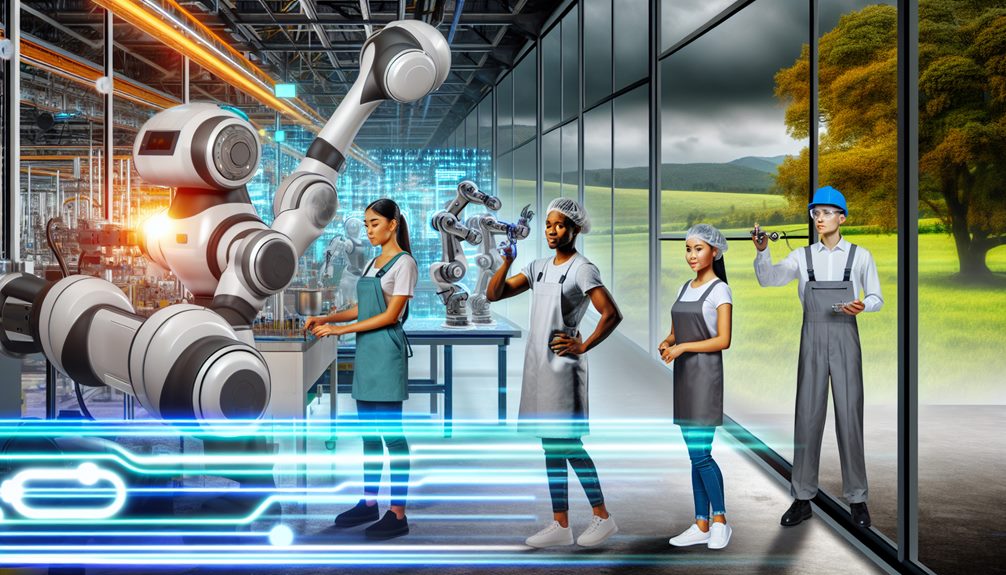
The impact of automation on workforce dynamics is significant and multifaceted. Integration of AI and machine learning enhances productivity but raises concerns of job displacement, potentially affecting up to 30% of the global workforce by 2030. This shift necessitates a focus on reskilling and upskilling, with an emphasis on digital literacy and adaptive competencies. New roles are emerging that require collaboration between humans and machines, fostering innovation. Organizations must adopt strategic workforce development initiatives to address these challenges. Understanding these dynamics is essential for maneuvering the future landscape of work and harnessing the benefits of automation effectively.
Key Takeaways
- Automation is transforming workforce dynamics by enhancing productivity while raising concerns about potential job displacement across various industries.
- New hybrid roles are emerging, requiring skills for human-machine collaboration and emphasizing the importance of interdisciplinary teams.
- Continuous learning and upskilling are essential for employees to adapt to automated environments and maintain competitiveness in the job market.
- Digital literacy, critical thinking, and emotional intelligence are increasingly vital skills for navigating complex work scenarios and fostering collaboration in remote settings.
- Organizations must invest in reskilling initiatives and change management strategies to ensure employee retention and successful adaptation to technological advancements.
Overview of Automation Trends
In recent years, the landscape of automation has undergone significant transformation, driven by advancements in technology and shifting economic demands. This evolution reflects a broader trend towards increased automation efficiency across various sectors, where organizations leverage robotic advancements and smart technologies to optimize their operations. The integration of artificial intelligence (AI) into automation processes has catalyzed substantial workplace innovation, enabling more sophisticated task execution and decision-making.
Machine learning, as a subset of AI, plays a pivotal role in refining automation capabilities. By analyzing vast datasets, businesses can enhance process optimization, leading to improved productivity and reduced operational costs. Industry trends indicate a growing emphasis on technology adoption, with organizations increasingly investing in digital transformation initiatives to stay competitive in a rapidly changing marketplace.
Moreover, the convergence of automation and AI offers unprecedented opportunities for organizations to rethink their operational strategies. Companies are now adopting frameworks that facilitate seamless integration of smart technologies into their existing systems, ensuring that automation initiatives are not only efficient but also scalable. The focus on workplace innovation encourages a culture of continuous improvement, wherein employees are empowered to leverage technology to enhance their contributions.
As we observe these trends, it becomes evident that the future of automation is not merely about replacing human labor, but about augmenting workforce capabilities to foster greater freedom and creativity in the workplace. The ongoing evolution of automation signifies a critical juncture for businesses, one that requires strategic foresight and adaptability to thrive in an increasingly automated world.
Effects on Job Displacement
The integration of automation technologies, while fostering innovation and efficiency, has raised significant concerns regarding job displacement across various industries. As automation systems become increasingly sophisticated, they are replacing tasks traditionally performed by humans, fundamentally altering workforce demographics and contributing to heightened economic inequality. According to a McKinsey report, up to 30% of the global workforce could be displaced by 2030, prompting urgent discussions about job security and the implications for the labor market.
The societal impact of these shifts extends beyond mere job loss; it affects worker morale and overall productivity. As employees face the reality of potential unemployment, anxiety and uncertainty can undermine motivation and engagement. Adaptive challenges emerge as industries adapt to automation, often leaving behind those unable to re-skill or shift into new roles.
In light of these trends, corporate responsibility becomes paramount as businesses must navigate the ethical implications of their automation strategies. Companies are increasingly called upon to implement policies that consider the societal consequences of job displacement, such as providing training programs and support for affected workers. This necessitates a collaborative approach between the public and private sectors to mitigate the adverse effects on job security.
Ultimately, the policy implications of automation demand attention. Policymakers must develop frameworks that promote equitable access to opportunities and support displaced workers, ensuring that technological advancements do not exacerbate existing inequalities. Addressing these issues is essential for fostering a resilient and adaptable workforce in an era defined by rapid change.
New Opportunities and Roles
Recognizing the transformative impact of automation, industries are beginning to uncover new opportunities and roles that emerge from technological advancements. As automation tools streamline processes, they also create a demand for a workforce equipped to engage with these innovations. The following points highlight key areas of growth:
- Hybrid Roles: As organizations integrate automation, they require professionals who can navigate both human and machine collaboration, leading to the emergence of hybrid roles that blend technical and interpersonal skills.
- Freelance Opportunities: The digital economy is expanding, providing freelancers with the flexibility to offer specialized services in areas such as data analysis, machine learning, and automation ethics, thereby fostering greater workforce diversity.
- Interdisciplinary Teams: Automation necessitates collaboration across various disciplines, prompting organizations to form interdisciplinary teams that leverage diverse skill sets to enhance problem-solving and innovation.
- Remote Work: The shift towards automation has accelerated remote work adoption, enabling organizations to tap into a global talent pool while offering employees greater freedom and work-life balance.
These new roles and opportunities not only contribute to job creation but also position businesses to thrive in a rapidly evolving landscape. As companies embrace automation, they must prioritize ethical considerations and workforce diversity to guarantee that the benefits of technological advancements are equitably distributed. The future of work is not merely about displacement; it is also about embracing the possibilities that automation brings to the labor market.
Skills Development and Upskilling
As automation continues to reshape industries, the importance of continuous learning becomes increasingly critical for the workforce. Emerging skill requirements are shifting dramatically, necessitating that employees engage in upskilling to remain competitive. Data indicates that organizations prioritizing skills development not only enhance employee adaptability but also improve overall productivity and innovation.
Importance of Continuous Learning
A significant portion of today's workforce faces the pressing need for continuous learning to remain relevant in an increasingly automated environment. The rapid pace of technological advancements necessitates a shift towards adaptive strategies that foster a robust learning culture. To effectively navigate these changes, professionals should prioritize:
- Lifelong Education: Embrace ongoing training to acquire new skills and remain competitive.
- Digital Literacy: Develop proficiency in digital tools and technologies essential for modern workplaces.
- Knowledge Sharing: Engage in collaborative learning opportunities to enhance group competencies and promote an innovation mindset.
- Personalized Training: Seek tailored educational paths that align with individual career goals and industry demands.
The integration of continuous learning within organizational frameworks not only supports employee growth but also enhances overall productivity. By fostering a culture that values learning, companies can cultivate an environment where adaptive strategies thrive, enabling employees to respond to automation's challenges proactively. This commitment to development empowers individuals to harness their potential, ensuring that they contribute meaningfully in a future where skills rapidly evolve. Consequently, continuous learning emerges as a critical pillar in sustaining workforce relevance amidst the relentless tide of automation.
Emerging Skill Requirements
The landscape of employment is undergoing significant transformation as automation reshapes job roles and workflows. As organizations increasingly adopt automated systems, emerging skill requirements have become essential for workforce adaptability. According to a recent study, 85% of jobs will require enhanced digital literacy, underscoring the need for technical proficiency in various digital tools and platforms.
Additionally, critical thinking and problem-solving skills have gained prominence, enabling employees to navigate complex scenarios that automation may not address effectively. Emotional intelligence is also important, as it fosters collaboration techniques necessary for successful remote teamwork. As organizations shift toward more flexible work environments, adaptability skills have emerged as a key competency, allowing employees to thrive in evolving landscapes.
Furthermore, creativity enhancement is important for innovation, as workers must generate unique solutions to challenges that arise from automation. Data analysis skills are increasingly sought after, enabling professionals to make informed decisions based on data-driven insights. To conclude, the current workforce must embrace a blend of technical and soft skills to remain competitive and resilient in an era dominated by automation.
Employer Perspectives and Adaptation
Employers are increasingly recognizing the necessity of embracing technological change as a critical strategy for maintaining competitive advantage in an automated landscape. This shift necessitates a focused approach to reskilling and upskilling the workforce, ensuring employees are equipped with the relevant skills to adapt to new technologies. Data indicates that organizations investing in workforce development not only enhance employee retention but also improve overall productivity, underscoring the importance of proactive adaptation.
Embracing Technological Change
Adaptation to technological change has emerged as a critical factor influencing organizational success in the modern workforce. Employers must understand that embracing technological advancements is not merely a response to market pressures but a strategic imperative. To effectively navigate this shift, organizations should focus on the following key areas:
- Digital Transformation Strategies: Implementing thorough plans that align technology with business objectives can enhance operational efficiency.
- Employee Engagement Initiatives: Actively involving employees in the transformation process fosters a culture of acceptance and innovation.
- Performance Metrics: Establishing clear metrics to evaluate the impact of automation on productivity guarantees continuous improvement.
- Change Management Frameworks: Creating structured approaches to manage shifts reduces resistance and enhances adaptability.
Incorporating these elements allows employers to harness the full potential of automation while maintaining a motivated workforce. Data-driven analysis indicates that organizations that prioritize these strategies experience higher employee satisfaction and retention rates. Ultimately, embracing technological change not only positions businesses for success but also empowers employees to thrive in an evolving work environment. Such proactive measures are essential for fostering a culture that values freedom, innovation, and collaboration.
Reskilling and Upskilling Workforce
A strategic focus on reskilling and upskilling has become essential for organizations maneuvering the complexities of automation in today's workforce. As automation reshapes job roles, employers must prioritize digital literacy and the adoption of collaborative tools to guarantee their workforce remains competitive. Implementing skill assessments can help identify gaps in knowledge and competencies, allowing for tailored training interventions.
Remote training and online courses have emerged as critical components of these reskilling efforts, providing employees with flexible learning opportunities that align with their schedules. Additionally, certification programs can validate newly acquired skills, enhancing employees' marketability and confidence.
Partnerships with industry leaders can further enrich training initiatives, offering insights into current trends and necessary competencies within specific sectors. Mentorship programs can also foster knowledge transfer and support workforce diversity, as experienced professionals guide newer employees through their career development.
Moreover, job rotation strategies can facilitate experiential learning, allowing employees to develop a broader skill set. By adopting these strategies, organizations can not only mitigate the impact of automation but also cultivate a more adaptive, skilled workforce prepared for future challenges.
Future Workforce Predictions
As automation technologies continue to advance, predictions regarding the future workforce reveal a landscape marked by significant transformation. The integration of artificial intelligence (AI) and digital tools is reshaping work environments, leading to new dynamics in employee engagement, talent acquisition, and career mobility. Importantly, four key trends are anticipated:
- Rise of Remote Work: The shift towards remote work will solidify, enabling organizations to tap into a global talent pool while enhancing workplace flexibility for employees.
- Expansion of the Gig Economy: More individuals will seek gig-based roles, emphasizing worker autonomy and the desire for varied experiences rather than traditional, long-term positions.
- AI Integration in Work Processes: Automation will streamline operations, allowing workers to focus on higher-value tasks. This shift will necessitate reskilling initiatives to guarantee employees can adapt to new technologies.
- Enhanced Job Satisfaction and Employee Engagement: As workplaces become more flexible and adaptive, job satisfaction is likely to increase, fostering a culture of continuous improvement, collaboration, and innovation.
In this evolving landscape, organizations must prioritize employee engagement and satisfaction to retain talent. The future workforce will demand not only opportunities for career mobility but also an environment that promotes autonomy and flexibility, essential for thriving in a rapidly changing digital economy. As companies navigate these transformations, a proactive approach to workforce strategy will be critical in harnessing the benefits of automation while fostering an engaged and productive workforce.
Frequently Asked Questions
How Does Automation Affect Employee Mental Health and Job Satisfaction?
Automation can considerably influence employee mental health and job satisfaction, impacting job security and stress levels. It simultaneously affects work-life balance, employee engagement, productivity perception, and skill development, ultimately shaping workplace culture and mental well-being.
What Industries Are Most Resistant to Automation Changes?
Approximately 80% of jobs in the healthcare sector and education field exhibit resistance to automation. Additionally, creative industries, hospitality services, and skilled trades maintain a human-centric approach, emphasizing interpersonal skills that technology cannot replicate.
Are There Ethical Concerns Surrounding Automation in the Workplace?
Ethical concerns surrounding automation in the workplace include job displacement, workforce equity, and automation bias. Transparency issues and accountability measures are critical to mitigating these ethical implications and ensuring fair treatment across diverse employee demographics.
How Can Small Businesses Implement Automation Effectively?
Research indicates that 70% of small businesses leveraging automation tools experience significant productivity gains. To effectively implement automation, prioritize employee training, guarantee seamless technology adoption, and focus on enhancing workflow efficiency for sustained cost savings and competitive advantage.
What Role Does Government Policy Play in Automation's Impact?
Government policy greatly influences automation's trajectory through regulatory frameworks and policy incentives. By fostering innovation while ensuring workforce protection, effective policies can balance technological advancement with economic stability, ultimately shaping the future landscape of work and productivity.