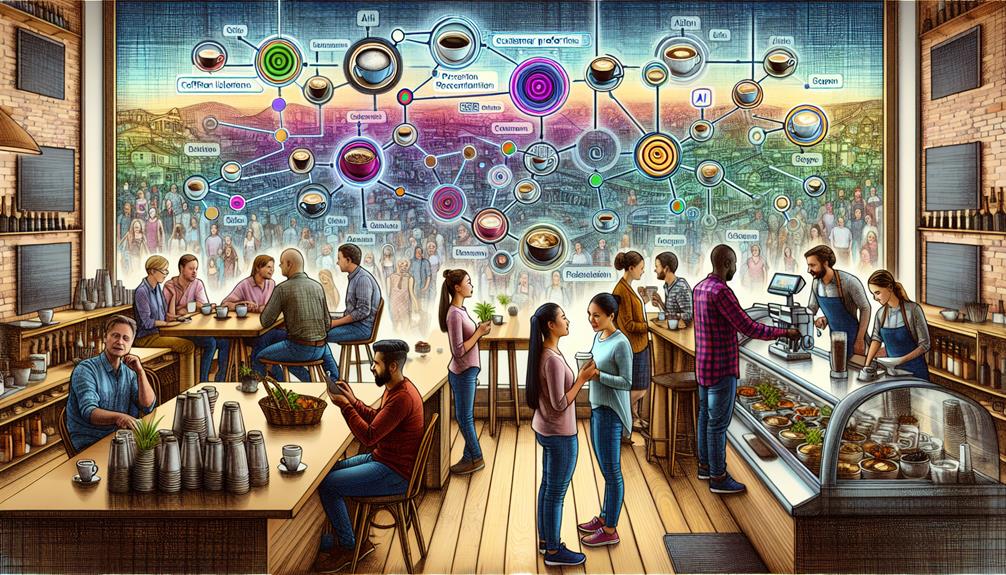
Imagine a world where you can effortlessly tap into the minds of your customers, gaining invaluable insights that drive your business forward. With AI-powered customer insights, this world becomes a reality for small and medium-sized enterprises (SMEs). Harnessing the power of artificial intelligence, you can unlock a treasure trove of information that will revolutionize the way you understand and engage with your customers. But how exactly can AI help you achieve this? Stay tuned to uncover the game-changing benefits that await your SME.
Key Takeaways
- AI-driven analytics provide valuable insights into customer segmentation and consumer psychology, allowing SMEs to personalize their marketing campaigns based on demographics, behavior, and preferences.
- Predictive analytics powered by AI help SMEs forecast future customer behavior and trends, enabling them to stay one step ahead and meet specific customer needs and preferences.
- AI-powered tools analyze customer data and tailor marketing campaigns to their preferences and behaviors, increasing the likelihood of conversion and enhancing customer loyalty.
- AI-driven insights not only guide product development and innovation through analyzing customer feedback and trends but also automate market research, providing real-time data on consumer behavior, market trends, and competitor analysis for informed decision-making.
Understanding Customer Behavior

To better understand your customers and their buying habits, harness the power of AI-driven analytics. Customer segmentation and consumer psychology are two key areas that can provide valuable insights into your target audience. By analyzing customer data using AI, you can uncover patterns and trends that will help you tailor your marketing strategies and improve customer engagement.
Customer segmentation allows you to divide your customer base into distinct groups based on various characteristics such as demographics, behavior, and preferences. This segmentation enables you to create personalized marketing campaigns that resonate with each group, increasing the likelihood of conversions and customer loyalty.
Furthermore, AI-driven analytics can delve into consumer psychology, uncovering the underlying motivations and decision-making processes that drive purchasing behavior. By understanding your customers' needs, desires, and pain points, you can create targeted messaging and offers that speak directly to their wants and needs.
In the era of data-driven decision-making, AI-powered analytics offers a powerful tool for small and medium-sized enterprises (SMEs) to gain a competitive edge. By leveraging customer segmentation and consumer psychology, you can unlock valuable insights that will guide your marketing efforts and help you connect with your target audience on a deeper level. Embrace the power of AI and unlock the potential of customer insights to drive your business forward.
Personalizing Customer Experiences
Enhance customer satisfaction and loyalty by personalizing their experiences with AI-powered analytics. By utilizing customer segmentation and personalized recommendations, you can create tailored interactions that make your customers feel valued and understood. Here are four ways to personalize customer experiences using AI:
- Segmentation: AI-powered analytics can help you divide your customer base into distinct segments based on various criteria such as demographics, past purchases, and browsing behavior. This allows you to understand each segment's unique preferences and needs.
- Personalized recommendations: AI algorithms analyze customer data to provide personalized product recommendations. By suggesting items based on individual preferences and browsing history, you can increase the chances of conversion and improve customer satisfaction.
- One-to-one communication: With AI-powered analytics, you can send personalized messages and offers to individual customers at the right time through their preferred channels. This level of personalized communication makes customers feel valued and strengthens their loyalty.
- Dynamic pricing: AI algorithms can analyze customer behavior and market conditions to offer personalized pricing. This approach allows you to optimize pricing strategies for each customer segment, maximizing revenue while providing fair and attractive offers.
Predicting Customer Needs and Trends
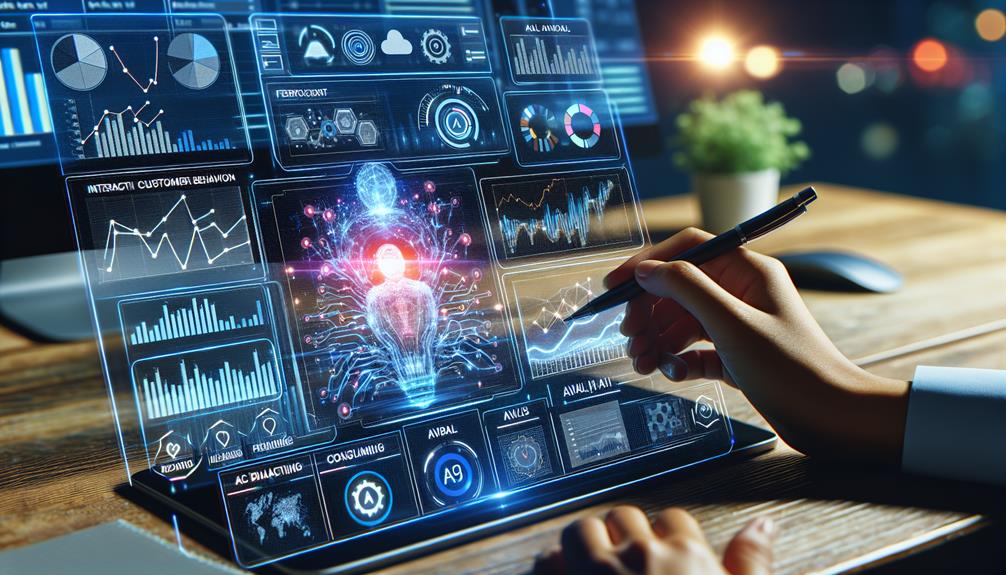
As you personalize customer experiences with AI-powered analytics, the next step is to predict their needs and trends. By leveraging customer segmentation and predictive analytics, you can gain valuable insights into the preferences and behaviors of your target audience. Customer segmentation allows you to divide your customer base into distinct groups based on different characteristics such as demographics, buying patterns, and interests. This segmentation enables you to identify specific customer needs and preferences, enabling you to tailor your products, services, and marketing efforts accordingly.
Predictive analytics takes this a step further by utilizing historical data and advanced algorithms to forecast future customer behavior and trends. By analyzing past interactions and transactions, predictive analytics can identify patterns and predict what customers are likely to need or want in the future. This valuable information allows you to proactively meet customer expectations, anticipate demand, and stay ahead of your competitors.
With the power of AI, you can automate the process of predicting customer needs and trends, saving time and resources. By continuously analyzing customer data and updating your predictive models, you can ensure that you are always one step ahead in meeting customer demands. So, embrace the power of predictive analytics and customer segmentation to unlock valuable insights and drive the success of your business.
Improving Marketing Campaigns and ROI
You can significantly boost your marketing campaigns and improve your return on investment by leveraging AI-powered analytics. Here's how:
- Data analytics: AI-powered tools can analyze large volumes of data to uncover valuable insights about your customers. By understanding their preferences, behaviors, and purchasing patterns, you can tailor your marketing campaigns to resonate with their needs and desires.
- Customer segmentation: AI algorithms can segment your customer base into distinct groups based on various criteria such as demographics, buying habits, and interests. This allows you to create targeted marketing messages that are more likely to attract and engage specific segments of your audience.
- Personalization: AI can help you deliver personalized marketing messages at scale. By using data analytics and customer segmentation, you can create highly relevant and personalized content that speaks directly to individual customers, increasing the likelihood of conversion and enhancing customer loyalty.
- Optimization: AI-powered analytics can continuously monitor and optimize your marketing campaigns in real-time. By analyzing data and performance metrics, AI algorithms can identify trends, patterns, and opportunities for improvement, enabling you to make data-driven decisions and allocate your resources more effectively.
Enhancing Product Development and Innovation

To further drive innovation and improve your products, leverage the power of AI-driven insights. AI can play a crucial role in enhancing product development and innovation by providing valuable information and guiding you in the right direction. One way AI can help is through product ideation. By analyzing customer feedback, online reviews, and social media conversations, AI can identify emerging trends and consumer preferences, giving you valuable insights for developing new products or improving existing ones.
Market research is another area where AI can make a significant impact. Traditional market research methods can be time-consuming and expensive, but AI-powered tools can automate the process and provide real-time data on consumer behavior, market trends, and competitor analysis. With this information at your fingertips, you can make informed decisions about product features, pricing strategies, and market positioning, ensuring that your products are aligned with customer needs and preferences.
Streamlining Customer Service and Support
When it comes to streamlining customer service and support, AI-powered solutions offer enhanced service efficiency by automating support options and providing AI-driven customer interactions. With AI, you can automate routine customer inquiries and provide instant responses, reducing response time and improving customer satisfaction. AI-powered chatbots and virtual assistants can handle customer queries, provide personalized recommendations, and resolve issues, allowing your team to focus on more complex tasks and deliver a higher level of service.
Enhanced Service Efficiency
Streamlining customer service and support can significantly enhance service efficiency for SMEs, leveraging AI-powered customer insights. Here are four ways AI can help you improve your service operations:
- Service automation: AI can automate repetitive tasks, such as answering frequently asked questions or processing simple customer requests, freeing up your team to focus on more complex issues.
- Operational effectiveness: By analyzing customer data and feedback, AI can identify areas for improvement in your service processes, allowing you to optimize your operations and provide a better customer experience.
- Personalized support: AI-powered customer insights enable you to understand individual customer needs and preferences, allowing you to tailor your support and deliver a more personalized service.
- Proactive customer service: AI can monitor customer behavior and predict potential issues, enabling you to proactively address them before they become problems, leading to higher customer satisfaction.
With AI-powered customer insights, you can streamline your customer service and support, enhancing your service efficiency and providing an exceptional experience for your customers.
Automated Support Options
By implementing automated support options, SMEs can further streamline their customer service and support processes, leveraging the power of AI-powered customer insights. Automated chatbots are a key component of these support options, allowing customers to interact with a virtual assistant that can provide instant responses and assistance. These chatbots are trained to understand and respond to common customer queries, reducing the need for human intervention and improving response times. Additionally, self-service options can be integrated into the support system, allowing customers to find answers to their questions or troubleshoot issues on their own. This empowers customers, giving them the freedom and flexibility to find solutions at their convenience. By embracing automated support options, SMEs can enhance their customer service capabilities while reducing costs and improving efficiency.
Ai-Driven Customer Interactions
To streamline customer service and support, SMEs can utilize AI-driven customer interactions. This technology enables businesses to provide efficient and personalized assistance to their customers, enhancing the overall customer experience. Here are four ways AI-powered customer interactions can benefit your SME:
- Smart chatbots: These intelligent bots can handle customer queries, provide instant responses, and guide customers through the purchasing process, reducing the need for human intervention.
- Virtual assistants: These AI-powered assistants can assist customers with complex tasks, such as product recommendations, troubleshooting, and order tracking, ensuring a seamless and hassle-free experience.
- 24/7 availability: AI-driven customer interactions allow businesses to provide round-the-clock support, catering to customers in different time zones and ensuring their needs are met, even outside regular business hours.
- Data-driven insights: AI technology can analyze customer interactions, preferences, and behavior to provide valuable insights, helping SMEs understand their customers better and make data-driven decisions to improve their products and services.
Optimizing Pricing and Revenue Strategies
You can utilize AI-powered customer insights to optimize your pricing and revenue strategies. By leveraging pricing optimization techniques, you can ensure that your products or services are priced competitively and attractively to your target market. Additionally, you can implement revenue maximization strategies that help you identify opportunities for upselling, cross-selling, and improving customer lifetime value.
Pricing Optimization Techniques
Implementing effective pricing optimization techniques is crucial for maximizing revenue and optimizing strategies for small and medium-sized enterprises. To help you achieve this, here are four pricing optimization techniques that can drive your business forward:
- Competitive pricing analysis: Stay ahead of the competition by analyzing their pricing strategies. Understand their pricing structure, discounts, and promotions to make informed pricing decisions.
- Demand forecasting: Predicting customer demand accurately is essential for setting the right prices. Utilize AI-powered tools to analyze historical data, market trends, and customer preferences to forecast demand and adjust pricing accordingly.
- Dynamic pricing: Embrace dynamic pricing strategies to adapt to changing market conditions. Set prices based on real-time factors such as supply and demand, competitor pricing, and customer behavior to maximize revenue.
- Segmented pricing: Tailor your pricing to different customer segments based on their willingness to pay. Analyze customer data and preferences to create targeted pricing strategies that resonate with specific market segments.
Revenue Maximization Strategies
Maximizing revenue and optimizing pricing strategies are essential components of revenue maximization for small and medium-sized enterprises. As an SME owner, your aim is to achieve sustainable revenue growth and increase profitability. To accomplish this, you need to implement effective pricing strategies that align with your business goals. One approach is value-based pricing, where you set prices based on the perceived value your product or service provides to customers. This strategy allows you to capture a larger share of the market and maximize revenue by charging what customers are willing to pay. Another strategy is dynamic pricing, which involves adjusting prices in real-time based on factors like demand, competition, and customer behavior. By leveraging AI-powered tools and customer insights, you can optimize your pricing strategies and uncover new opportunities for revenue growth.
Leveraging Competitive Intelligence

To effectively leverage competitive intelligence, you can utilize AI-powered tools to gain valuable insights into your industry and stay ahead of your competitors. With the help of AI, you can take your competitive analysis and market research to a whole new level. Here are four ways AI can assist you in leveraging competitive intelligence:
- Real-time monitoring: AI-powered tools can constantly monitor your competitors' activities, such as pricing changes, product launches, and marketing campaigns. This enables you to stay updated and respond quickly to any changes in the market.
- Predictive analytics: AI can analyze vast amounts of data to identify patterns and trends in your industry. By leveraging predictive analytics, you can anticipate market shifts and make informed decisions to outmaneuver your competitors.
- Sentiment analysis: AI can analyze customer feedback, reviews, and social media conversations to understand the sentiment around your competitors' products or services. This insight can help you identify areas where you can differentiate yourself and improve customer satisfaction.
- Competitive benchmarking: AI-powered tools can compare your performance against your competitors across various metrics, such as customer satisfaction, market share, and brand reputation. This benchmarking allows you to identify areas where you are falling behind and make data-driven improvements.
Frequently Asked Questions
How Does Ai-Powered Customer Insights for SMEs Differ From Traditional Market Research Methods?
AI-powered customer insights for SMEs differ from traditional market research methods by leveraging advanced technology to analyze vast amounts of data in real-time, providing more accurate and actionable insights for decision-making.
Can Ai-Powered Customer Insights Be Used to Target Specific Customer Segments?
To target specific customer segments, AI-powered customer insights revolutionize your sales and revenue. No more guesswork or wasted efforts. Let the power of AI guide you towards freedom and success.
How Can AI Technology Help SMEs Improve Their Marketing CampAIgns and Increase Their Roi?
To improve your marketing campaigns and increase ROI, AI technology can help you with AI-powered personalization and customer segmentation. It allows you to target specific customer segments and tailor your marketing efforts for maximum impact.
What Are Some Examples of Successful Ai-Powered Customer Insights Implementation in Smes?
You can find examples of successful AI-powered customer insights implementation in SMEs. These examples showcase the benefits of using AI technology to gain valuable insights into customer behavior and preferences, leading to improved marketing campaigns and increased ROI.
Is There a Limit to the Amount of Data That Ai-Powered Customer Insights Can Analyze to Provide Accurate Predictions and Recommendations?
There are limitations to the amount of data AI-powered customer insights can analyze for accurate predictions and recommendations. Data scalability can affect accuracy, so it's important to consider the size and quality of the data.